
Borekitas are little hand pies with a pastry shell and various savoury fillings. They are a traditional Sephardic treat.
Pastry
This is the traditional pastry for these pies, but feel free to use any tender and flaky pastry you like.
Ingredients
- Water: 1 quantity (about 125 ml–half a cup–per filling below)
- Neutral oil (sunflower is traditional): 1 quantity
- Cold butter (margarine is traditional, but butter works well): 1 quantity
- Plain flour or pastry flour (or all purpose flour if you’re very careful not to overwork it): as much as is needed. Traditionally, you would aim for the consistency of an earlobe. I suggest 8 quantities by volume or 4 by weight (vs water)
Method
- Cube the cold butter into small pieces (traditionally, the size of Turkish backgammon dice). Keep the diced butter in the fridge until everything else is in place.
- In a mixer, food processor, or in a large bowl with a pastry cutter or a fork or two, work the ingredients until the butter pieces are no larger than a grain of rice and the dough more or less holds together. Do not overwork or the dough will be tough and not flaky.
Assembly and baking
Note: recipes for three types of filling are below
Oven temperature: 180 C (350 F)
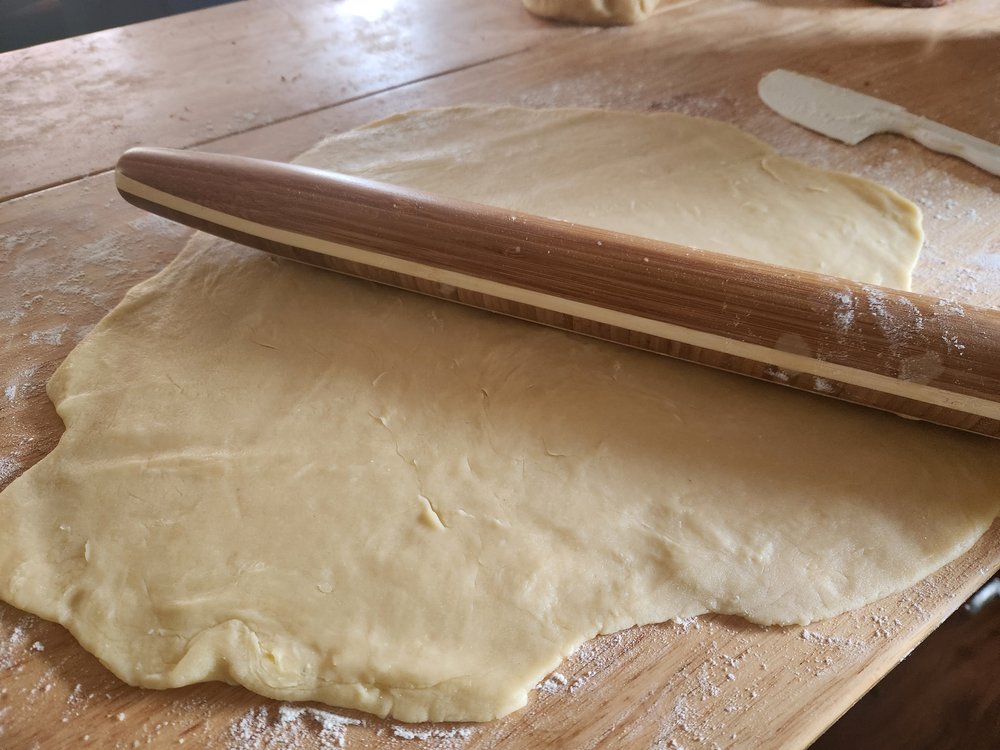
- Roll the dough out quite thinly (3 mm or about 1/8 inch)
- Assemble individual pies of a size or shape you like. Here are some suggestions:
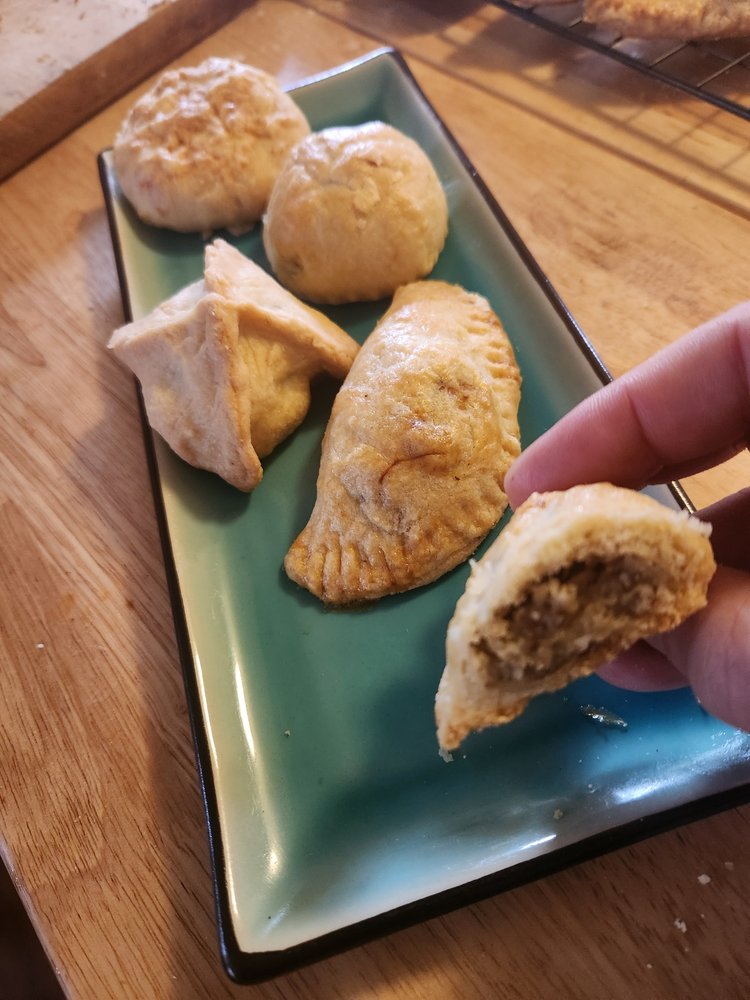
- Pirozhki shape: cut generously sized circles of dough (I used an English muffin ring, about 10 cm diameter). Place as much filling on each circle as you think you can enclose fully. Fold the circle in half and seal the edges.
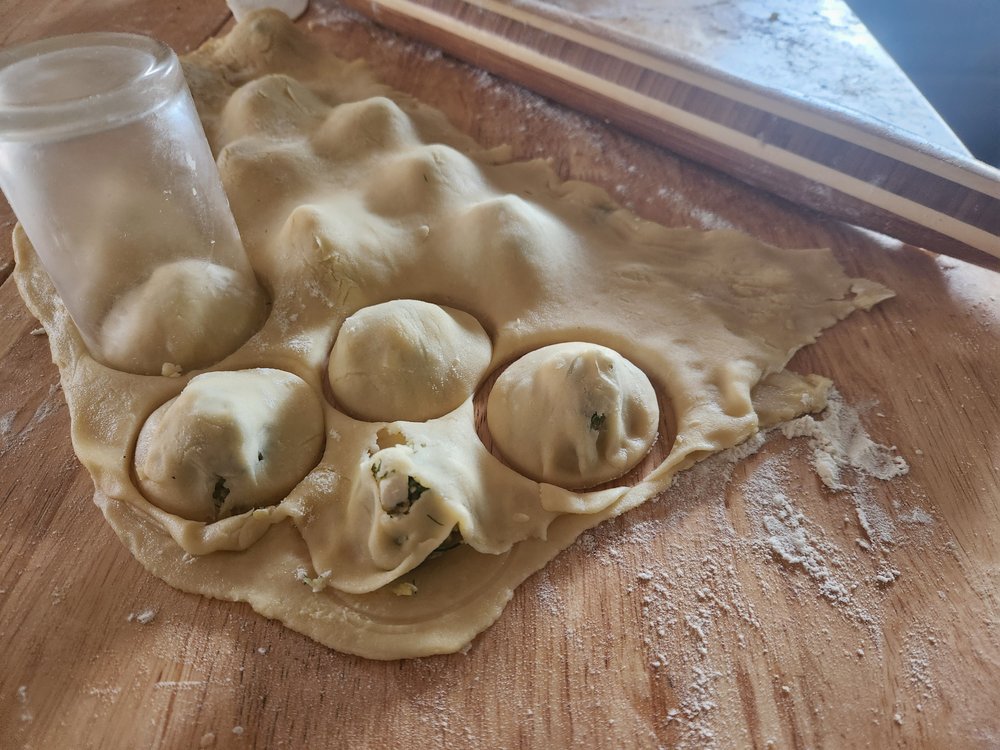
- Finjan shape: Find a cutter (traditionally a coffee cup) of a suitable size (I used one about 5 cm across). Cut your dough sheet into two about equal sized pieces. Arrange bits of filling on one piece spaced so as to accommodate the cutter. Lay the other piece of dough on top, then cut through both layers of dough with the lumps of filling centred in each cut portion. The cutting action should seal the edges sufficiently, but you can crimp them for extra security if you like.
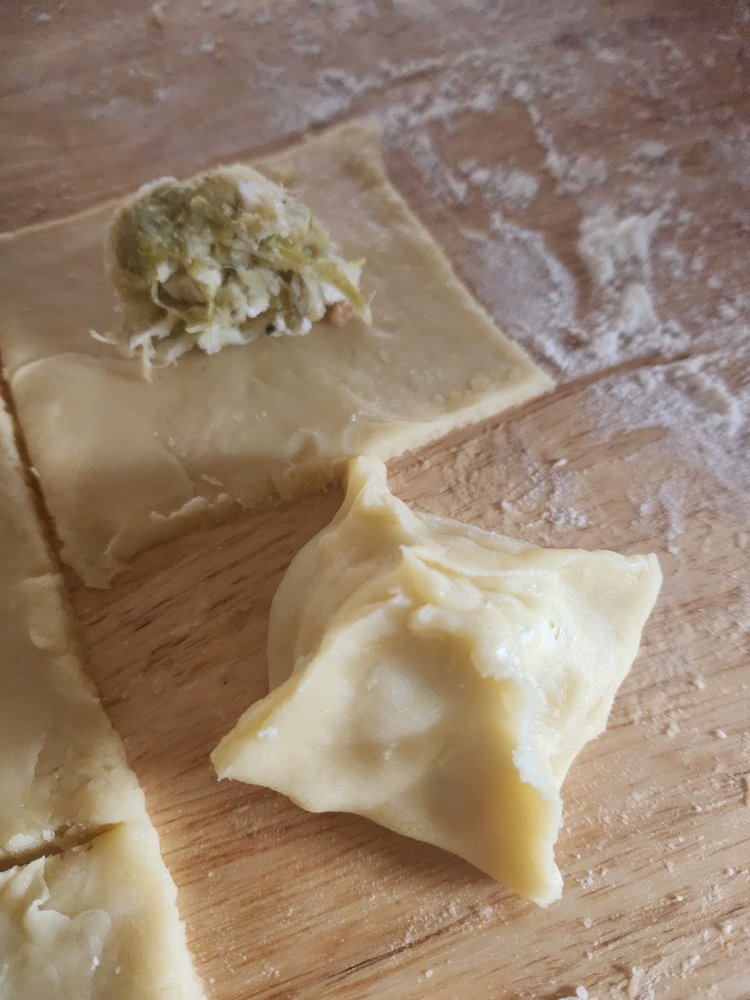
- Won ton shape: Cut the dough into squares of a size that pleases you. Put a generous amount of filling in each square. Lift up the four corners so they meet in the middle above the filling. Then seal the edges.
- Ravioli shape: layer two pieces of dough with filling as in the “finjan” procedure above. Then use a rolling cutter to cut between the lumps of filling to form the ravioli and seal the edges.
3. Prepare an egg wash (one egg and a bit of water, milk, or cream beaten together until no distinct bits of egg white remain). After arranging your pastries on a baking sheet (they can be quite close together; they do not spread), brush the tops with the egg wash.
4. Bake until the pastries are nicely browned. The baking time depends on how big you’ve made your pastries, but half an hour is a good ballpark.
Notes:
- If you still have more filling after assembling your pies, you can reroll any trimmings. To avoid overworking the dough, do not first knead the fillings back into a smooth dough. Instead, pile them up loosely on your work surface, then roll.
- If you have any dough left once you’ve used up your filling, you can use the remaining dough to make boyikos: grate some semi-hard cheese (kasseri is traditional, but manchego or cheddar would work well too). Work most of this into the leftover dough. Again, aim for barely incorporating the cheese and don’t try to make a uniform dough. Form into patties of about the same size as your borekitas. Place on a baking sheet and sprinkle the tops with the remaining cheese. Bake with the borekitas.
Fillings
Here are three examples of fillings for three versions of borekita.
Borekitas de berendjana
This is a smoky aubergine filling.
Ingredients
- Two nicely sized aubergines, about half a kilo (1 lb) total
- Salt and pepper to taste
- Feta cheese, 100 gr (3.5 oz), cut or crumbled into small bits
- Optional: bread crumbs or flour, 1 to 2 tablespoons
Method
- Char the aubergines. If you have a gas cooker, you can do this over a naked flame. Otherwise, you can use a blow torch if you have one, or use a very hot barbeque grill. With all these methods, you can finish cooking the aubergine in a 200 C (400 F) oven if you think charring it hasn’t quite cooked it through. You want it to be so soft that it collapses under its own weight. If you don’t care about the smoky flavour charring gives, then you can just directly bake the aubergines.
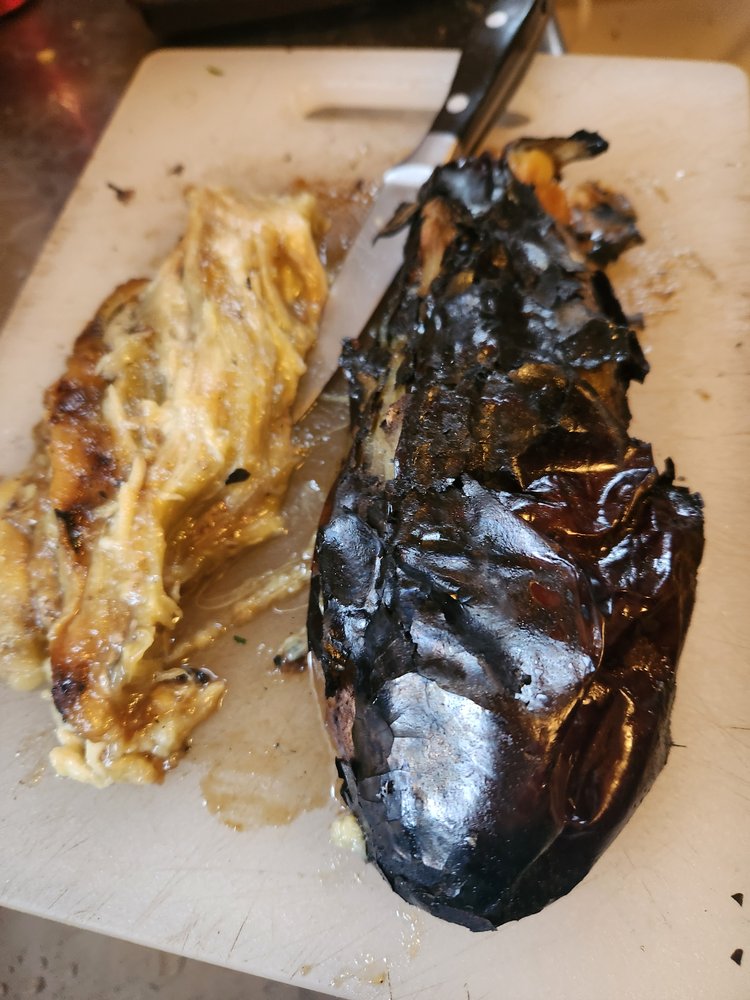
- Peel and discard the charred skin. Briefly drain the aubergine flesh in a strainer (if you want to be fancy, you can first put it in a big bowl of water with some lemon juice so it remains white. I don’t bother with this because I like the darker colour it gets without this step).
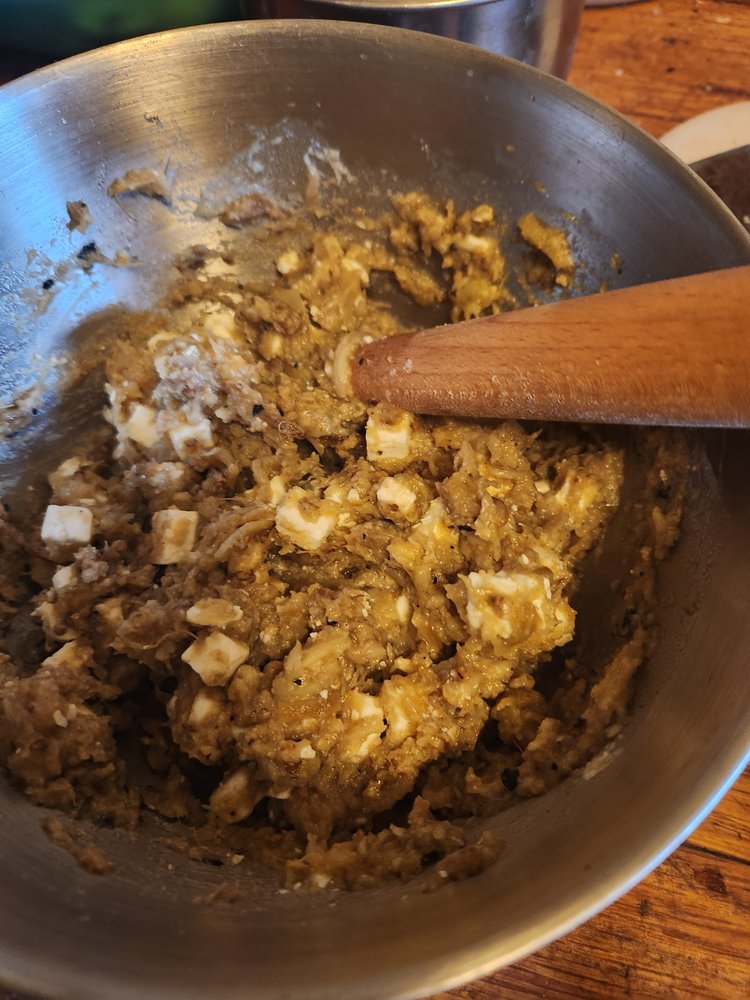
- Mix the aubergine flesh with the feta cheese and add any salt and pepper you like. If you feel like adding and herbs or spices, go for it, though this is not traditional.
- If you think the aubergine is a bit watery, add some bread crumbs or flour (any kind).
Borekitas de prasa
Leek filling.
Ingredients
- Leeks, about 1/2 kilo (1 lb)
- Feta cheese, 100 gr (3.5 oz), cut ir crumbled into little bits
- Salt and pepper to taste
- Optional: bread crumbs or flour (1 to 4 tablespoons)
Method
- Clean the leeks, then cut slice them into manageable pieces for boiling.
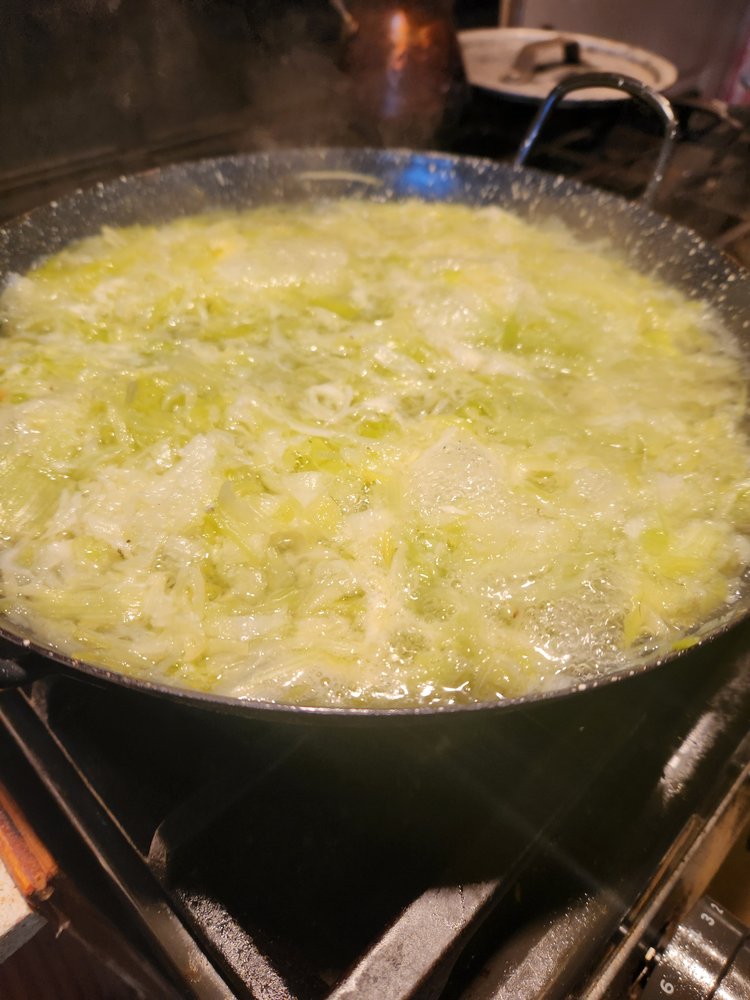
- Boil the leeks until the are very soft, about 20 minutes or more.
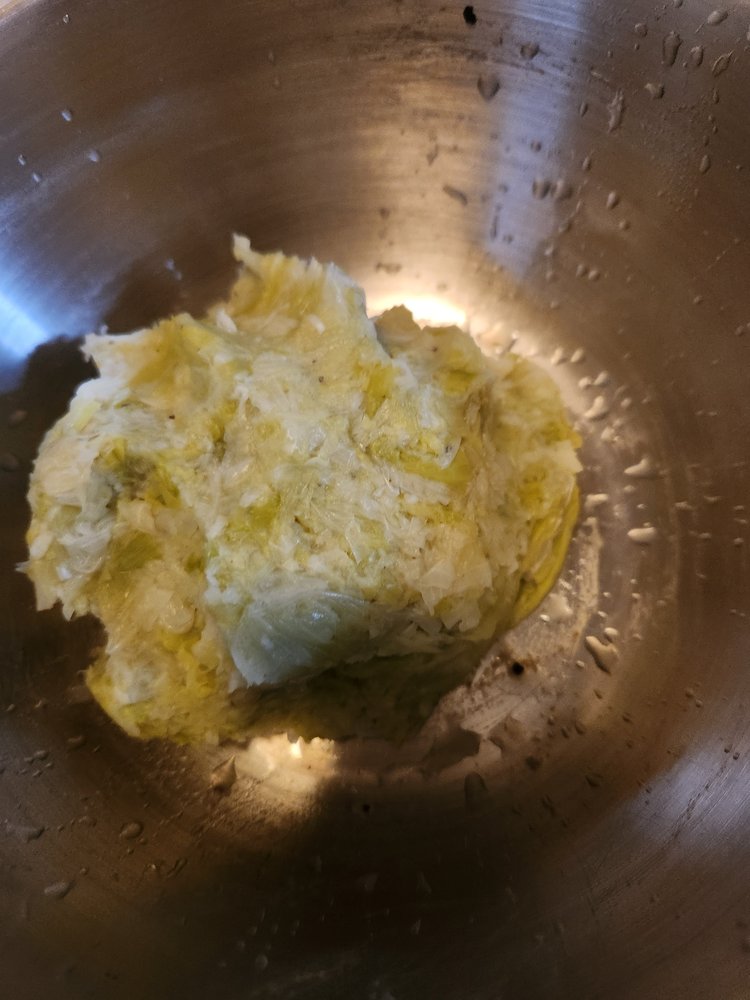
- Drain the leeks and let them cool, then squeeze out most of the water with your hands.
- Chop the leeks into very small pieces.
- In a bowl, combine the leeks and the feta. Add salt and pepper to taste. If the mixture appears watery, ad the bread crumbs or flour too.
Note: you can instead saute the leeks as describe below for the kalavasa filling.
Borekitas de kalavasa
This is a courgette filling.
Ingredients
- Courgettes, 500 gr (1 lb)
- Feta cheese, 100 gr (3.5 oz), cut or crumbled into small pieces
- Fresh dill weed, a small bunch, chopped medium fine
- Salt and pepper to taste.
- Optional: bread crumbs or flour, 1 to 3 tablespoons
Method
- Grate the courgettes coarsely
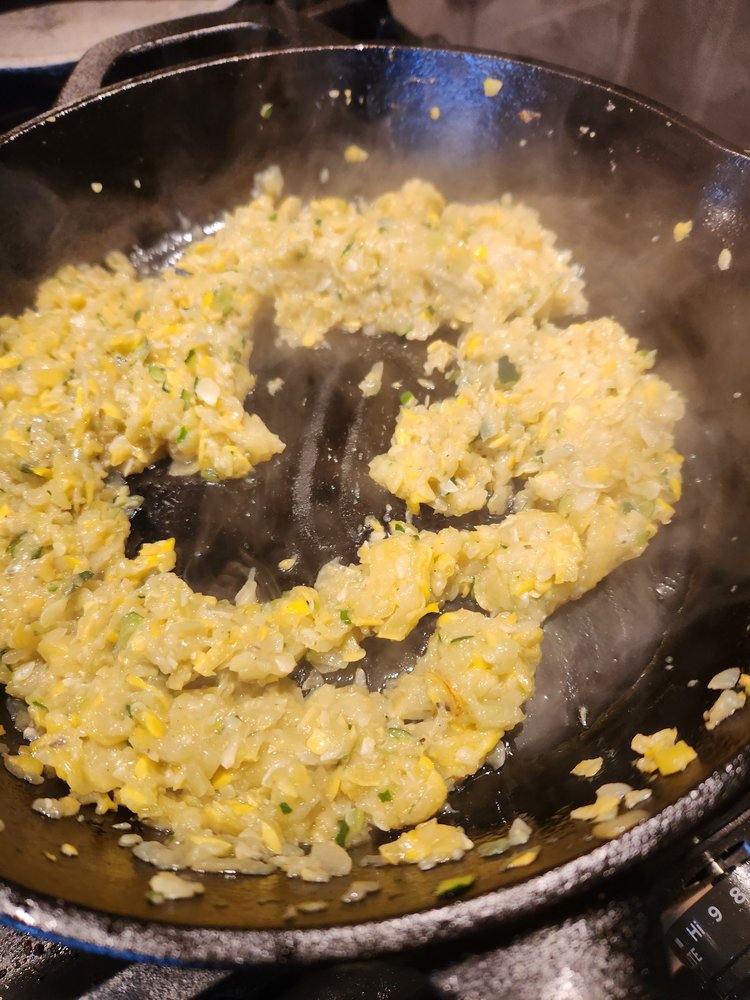
- Saute the grated courgettes with a bit of oil until they are quite soft and do not appear wet
- Let them cool somewhat, then mix them with the feta and dill. Add salt and pepper to taste. If the mixture looks wet, add the bread crumbs or flour.
Note: you can instead boil the courgettes as describe above for the prasa filling.
Pictures
Aubergine filling
Char the aubergines on an open flame
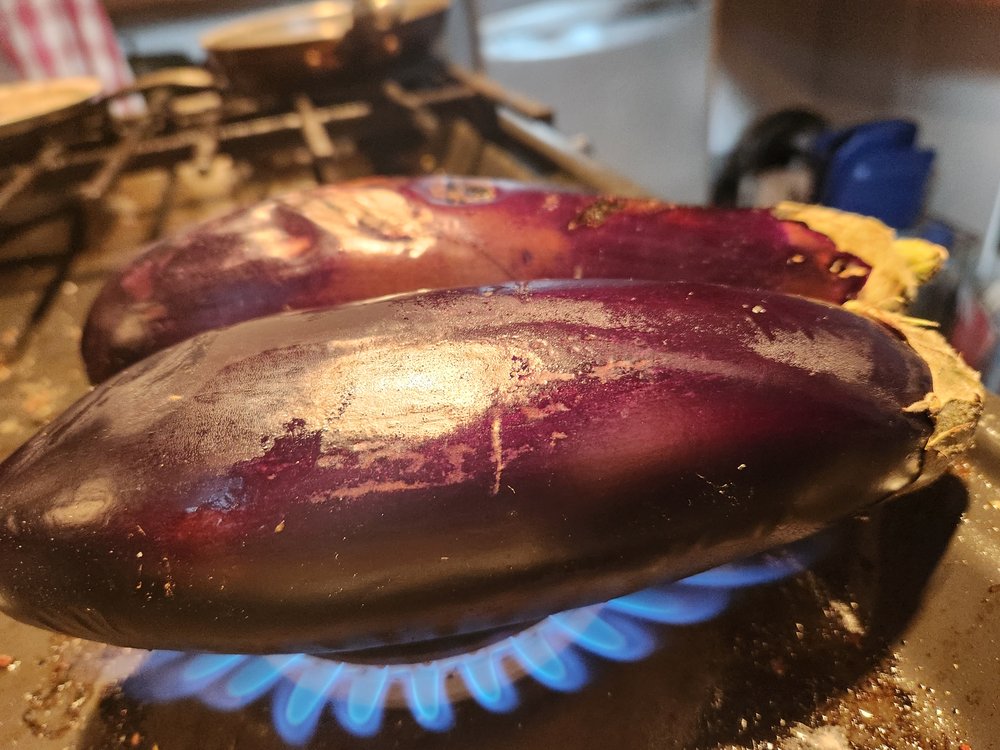
They are done when they are completely cooked and collapse under their own weight. If the skin is well charred but the flesh hasn’t yet come to this stage, you can finish them in a 200 degree oven.
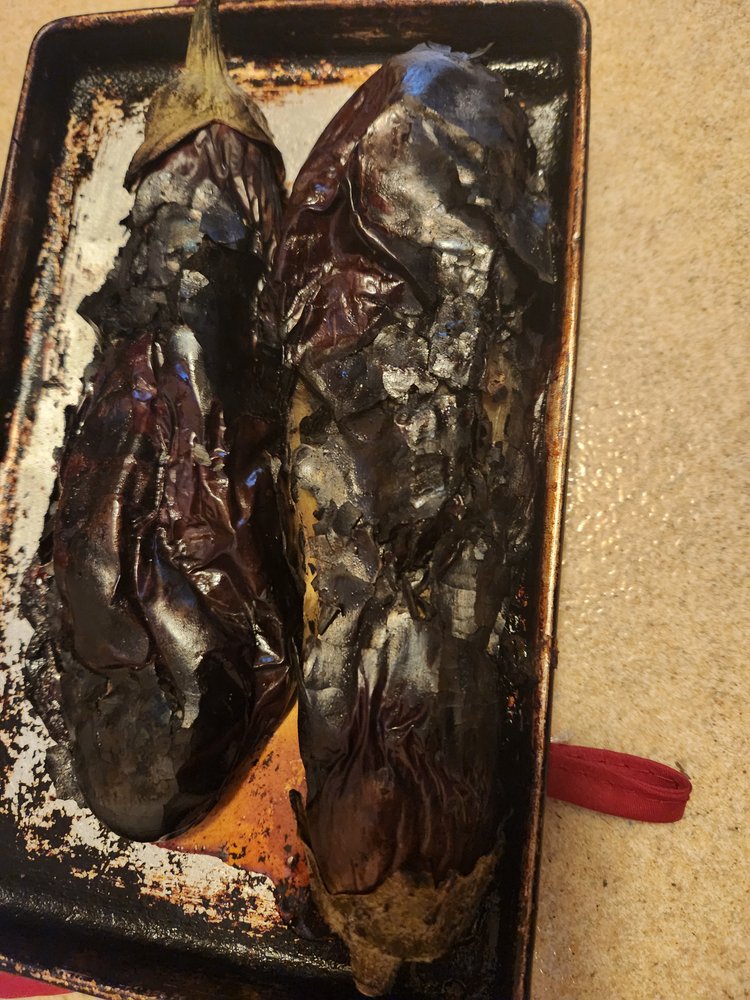
Peel and discard the charred skin.
Mix the aubergine pulp with feta cheese pieces. Your filling is ready.
Leek filling
Boil the leeks until they are very soft.
Once it is cool enough to handle comfortably, squeeze the cooked leeks to get rid of excess water.
Courgette filling
Saute coarsely grated courgette until it’s very soft and does not appear wet.
Pastry dough
Cut cold butter into small cubes.

Roll out dough.
Wrapping pirozhki style borekitas (this is the traditional shape)
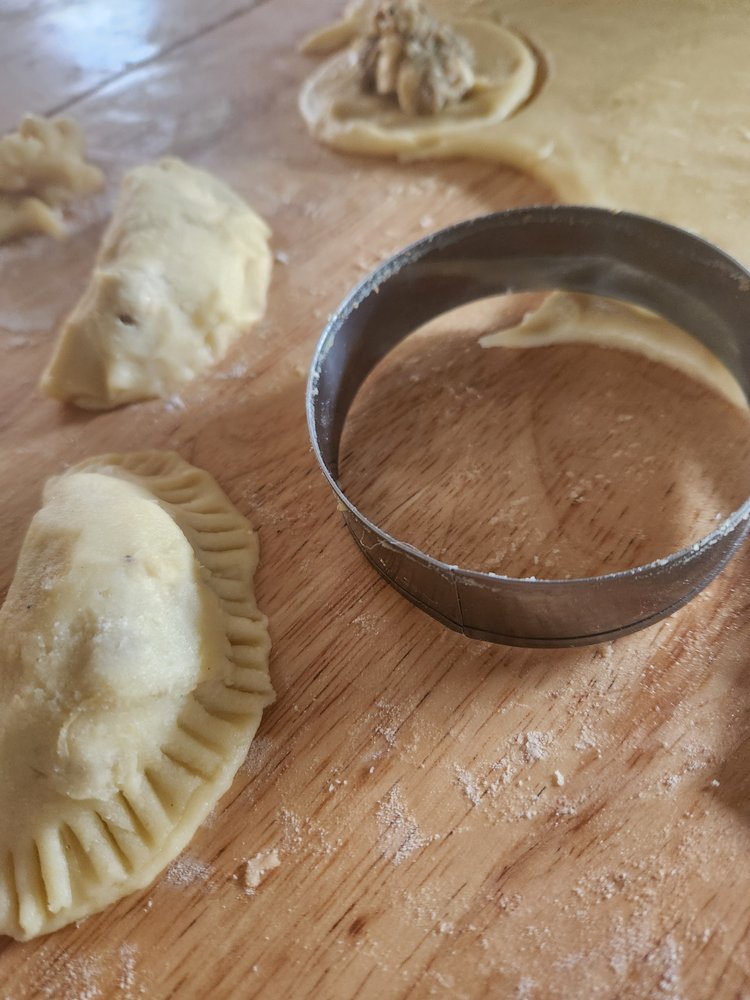
Making finjan style borekitas. This style is traditional for Turkish deep fried hand pies, usually with a ground meat filling. Though not traditional for borekitas, it may be easier to make that the pirozhki shape. Any tears in the dough may be repaired with extra bits of dough from the trimmings. Just tack on the extra dough bits lightly. Ravioli style is similar; you just cut between the piles of filling with a rolling cutter instead of a cup.
Making won ton style borekitas. This is not at all traditional, but may also be easier than the pirozhki shape. A much scaled-down version of this shape is used for Turkish mantı, sort of miniature tortellini with a meat filling.
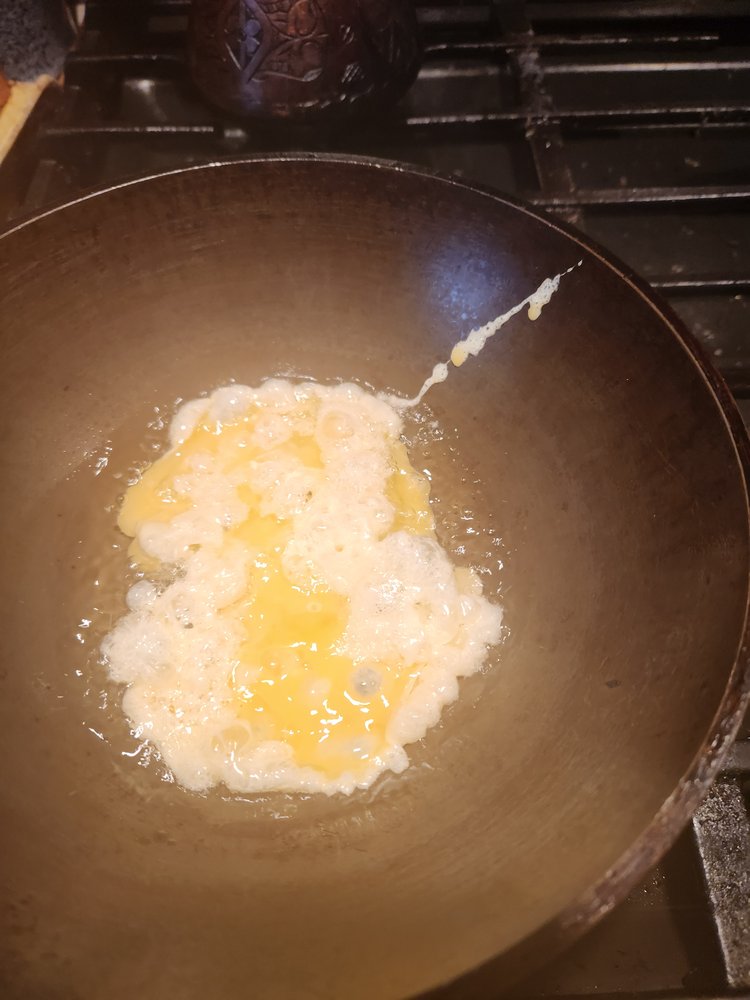
Chef’s treat
Making puffed egg with the leftover egg wash
Finished borekitas
…and boyiko
 random et cetera