
Here, I am following Christina Marigliese’s recipe for Soft and Chewy Caramel Apple Cookies, with a few notes. I haven’t included ingredients and steps, because doing so would have felt like content theft.
Chop and cook some apples with a little sugar and a little cinnamon:
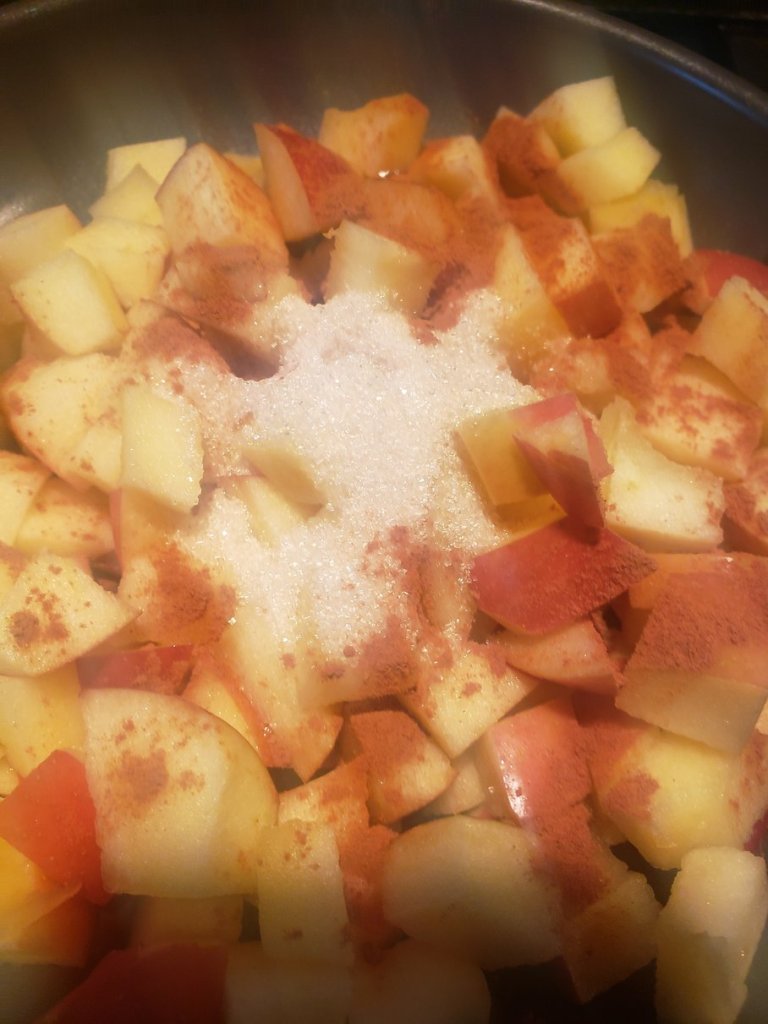
Cook apples until they are nice and soft. Depending on the type of apple you use, they may or may not give off a bunch of water. If they do, then briefly drain that and do not add it to the cookie dough.
The next few steps are standard for drop cookies, though with less liquid ingredients (butter and eggs) than usual. When you add the apples, you’ll supply plenty more. Cream butter and sugar. I’m using light brown sugar here. You can do that or use (as the recipe says) some dark brown sugar and some white sugar. Or you can use all white sugar and add a spoonful of molasses.

This is what the dough looks like after mixing in an egg:

When you add the apples, it looks more like a normal drop cookie dough:

If you made your dough in a food processor, you definitely want to fold in the apples by hand. If you used a mixer, you can mix in the apples at the lowest possible speed and for only five seconds or so.
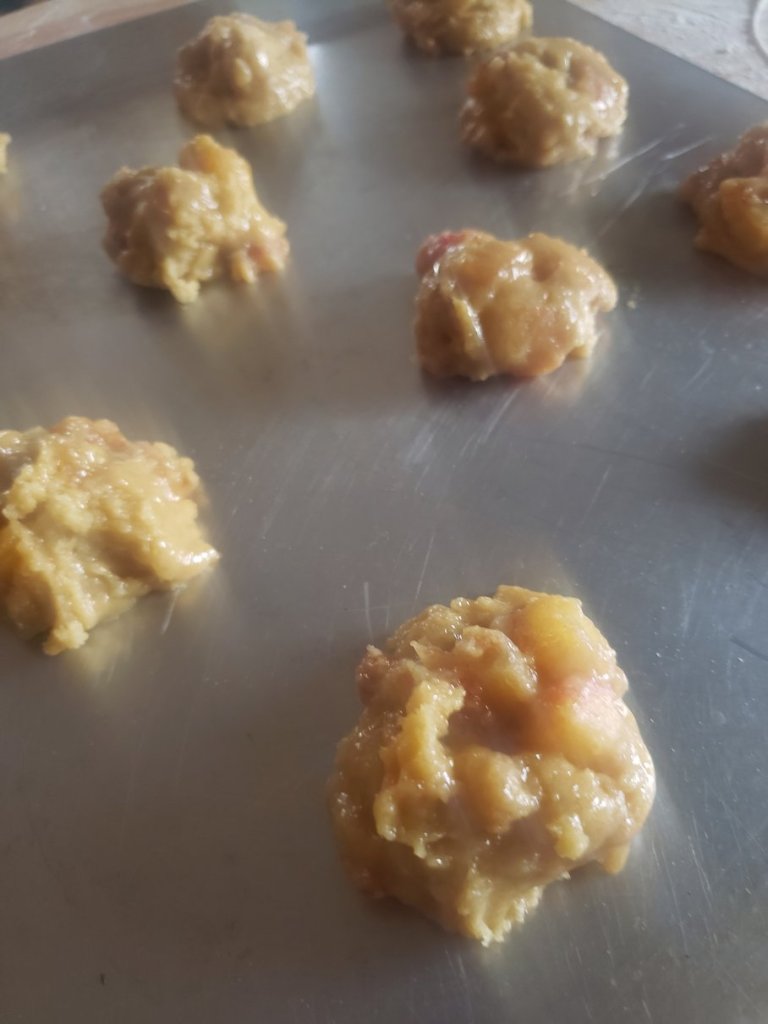
Depending on the type of apples you use, how long you cook them, how well you drain off any liquid that comes out during cooking, and how gentle you are in mixing them in, your dough might be fine, or it might be quite liquid, more like a pancake batter. If the dough is relatively firm, then go ahead and make drop cookies as the recipe says. If it’s more liquid, do not add more flour. Instead, do one of the following: you can pour your dough cum batter into a sheet pan of a suitable size or a springform cake pan and bake it whole, and then cut it into cookie size pieces. Or, you can take a large cast iron skillet (or numerous small ones), heat a knob of butter until it just starts to sizzle, pour your batter in, then bake it in the skillet(s) and call it a skillet cookie. If you do that, you might also consider omitting the caramel sauce and instead topping your skillet cookie with a nice salted caramel gelato.
I’m making regular drop cookies here:
While the cookies are baking, you make your caramel sauce. The main thing to remember here is: DO NOT STIR. If you stir, you provide nucleation sites and your caramel will crystallize.
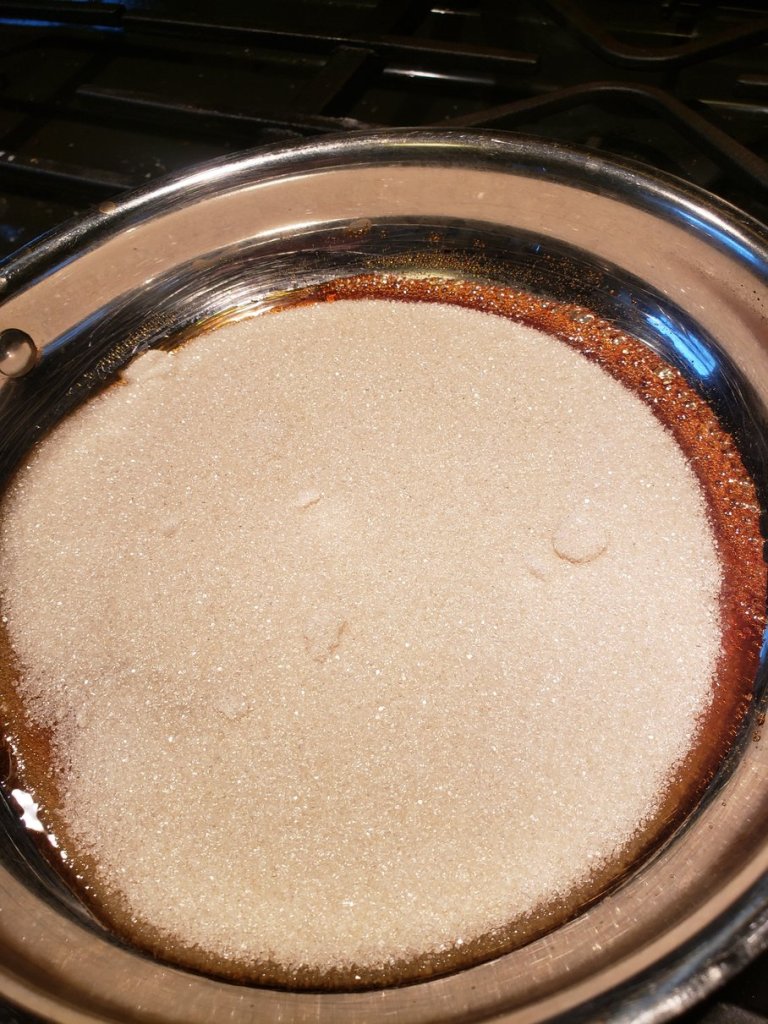
Here is some sugar in a pan. Stainless steel is highly recommended here, because you can clearly see your sugar turning color.

You might find that one side is cooking faster than the other (top right in the picture below). If this happens, DO NOT STIR. Turn the heat down slightly, move your pan so the other side gets more direct heat, and, optionally, very gently move your pan back and forth to move the sugar around a tiny bit. DO NOT STIR.
Below, the sugar has mostly melted. It is now (and only now) ok to stir to help the rest of the sugar melt. Start stirring from the middle of the pan and do not let your stirring implement go all the way to the edge and touch the sides of the pan.
Note that I’m using light brown sugar here. If you use white sugar, don’t let your caramel get this dark.

Once all the sugar has melted, turn the heat down to the lowest simmer (or, if your pan is nice and heavy, just turn off the heat). Add your butter and salt. Though the recipe says unsalted butter, you can of course use salted butter and adjust the amount of salt you add. Depending on how hot your sugar get, the butter may or may not foam up like mad. If you’re worried about that, then by all means make your caramel in a deep saucepan rather than a skillet.
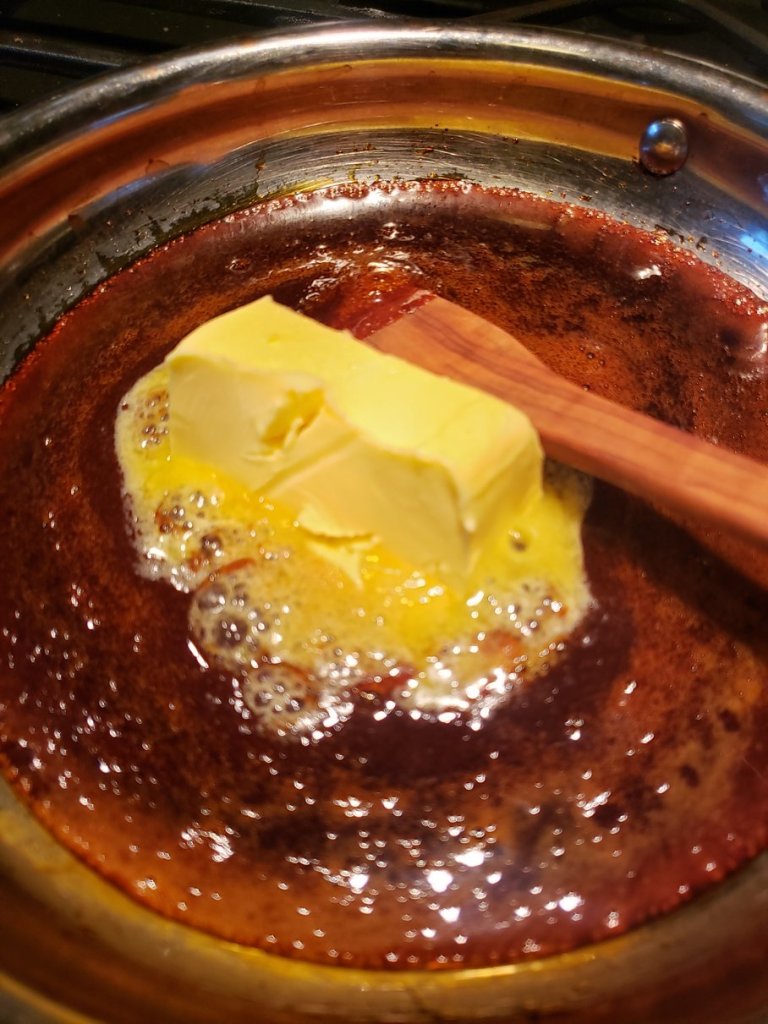
Stir until the butter is well incorporated. There might still be a little butterfat floating at the top. Don’t worry about that; it’ll get worked in with the cream later.

Now turn of the heat if you haven’t already. Add the cream. The sugar-butter mixture is still plenty hot to boil the cream on contact. Just keep stirring until the boiling subsides and your caramel sauce is nice and thick.

If your sauce is a bit grainy right now, you can try heating it gently while stirring it with a balloon whisk, and praying. If you let it cool down and it’s grainy, too bad.
Set the caramel sauce aside and let the cookies finish baking.

Let the cookies firm up for a few minutes, then transfer them to a wire cooling rack (or, a distant second best, a wooden board).
Drizzle with some caramel sauce. You can do this at any stage, while the sauce and the cookies are hot, warm, or cool. The result will look different (with more or less definition to the caramel drizzle) but will taste great just the same.
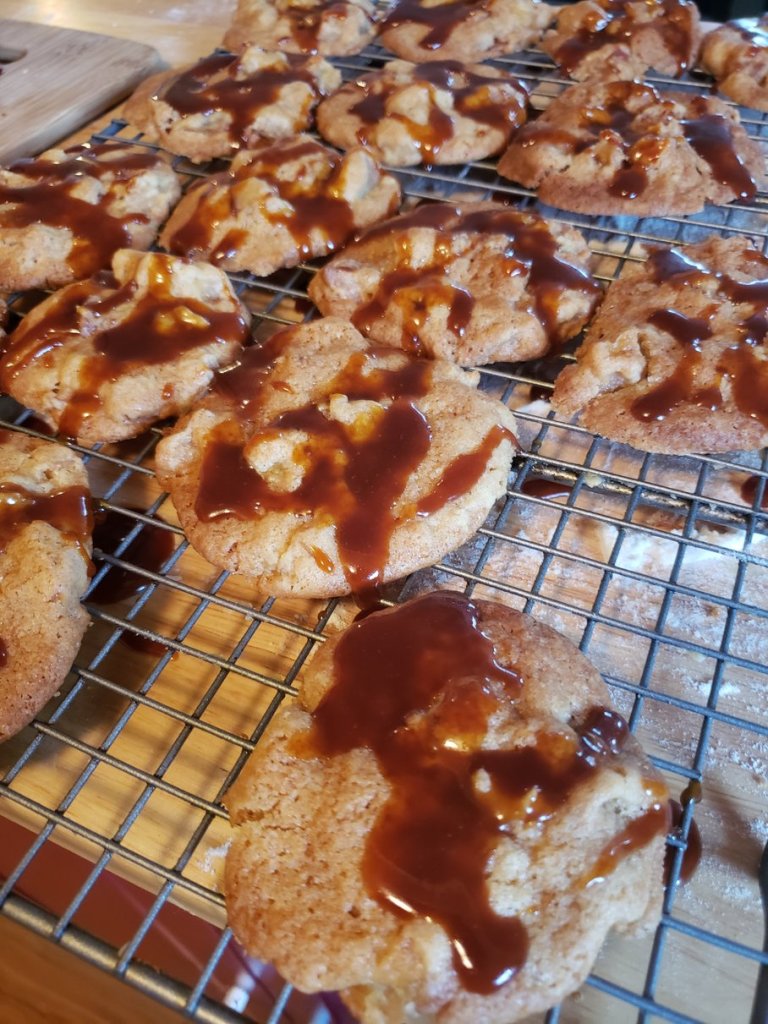
The recipe makes way more caramel sauce than you need. Just save it and use it for whatever purpose tickles your fancy. For example, pretend you’re in Argentina and serve it for breakfast with some bread.
 random et cetera